

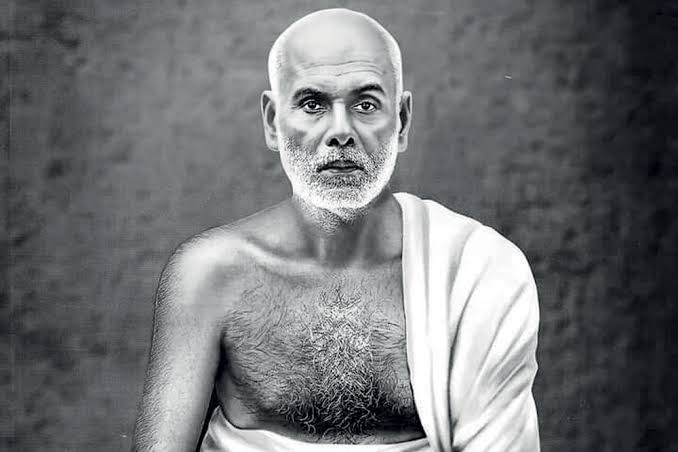
Sree Narayana Guru (1856–1928) was a pioneering philosopher, spiritual leader, and social reformer in India. Born into the marginalized Ezhava community in Kerala, he led a transformative movement against the rigid, caste-ridden society of his time. His life's work championed universal equality, encapsulated by his famous saying: "One caste, one religion, one god for humanity." [1, 2, 3]
Early Life and Asceticism
Birth: Born Narayanan (affectionately called "Nanu") on August 20, 1856, in the hamlet of Chempazhanthy, near Thiruvananthapuram, Kerala.
Background: His parents, Madan Asan and Kutti Amma, were well-respected, though their community faced severe caste discrimination.
Education: He received early education in Sanskrit, Malayalam, and Tamil, later mastering Ayurveda and astrology from his father and uncle.
Ascetic Life: Following the early passing of his wife, he embarked on the wandering life of a Hindu ascetic. He spent several years in deep meditation and penance in the forests of Maruthwamala. [2, 6]
Social and Religious Reforms
The Aruvippuram Consecration (1888): In a radical act of defiance against orthodox Hindu traditions—which restricted religious rituals to upper-caste Brahmins—he consecrated a Shiva temple at Aruvippuram. This signaled that spiritual liberation was open to everyone, regardless of caste.
Temple Philosophy: He built numerous temples, some of which housed mirrors instead of deities to emphasize that the divine resides within every individual.
SNDP Yogam (1903): Inspired by his followers, he established the Sree Narayana Dharma Paripalana (SNDP) Yogam to promote education, industry, and socio-political rights for the marginalized. [9, 11]
Philosophy and Teachings
Universal Brotherhood: He advocated for the unity of all faiths. One of his most enduring maxims is: "Whatever be the religion, it suffices if man becomes virtuous."
Advaita Vedanta: A deeply spiritual scholar, he taught non-dualism (Advaita) and authored numerous philosophical texts and hymns. Notable works include Atmopadesa Satakam and the universally praised community prayer Daiva Dasakam. [1, 2, 5, 6, 11]
Legacy and Later Years
Ashrams: He established major monastic institutions, notably the Sivagiri Matha in Varkala (1904) and an ashram in Aluva.
Interaction with Leaders: His progressive ideals caught the attention of prominent leaders like Mahatma Gandhi and Rabindranath Tagore, who sought his counsel.
Mahasamadhi: Sree Narayana Guru passed away on September 20, 1928, leaving behind a legacy that permanently reshaped the socio-cultural landscape of South India. His birth and death anniversaries continue to be celebrated as state holidays in Kerala today. [2, 11, 14, 15]
AI responses may include mistakes.
[1] https://en.wikipedia.org/wiki/Narayana_Guru
[2] https://www.britannica.com/biography/Narayana-Guru
[3] https://testbook.com/ias-preparation/sree-narayana-guru
[4] https://www.keralatourism.org/varkala/sree-narayana-guru.php
[5] https://byjus.com/free-ias-prep/sree-narayana-guru/
[6] https://testbook.com/important-days/death-of-sree-narayana-guru-popular-social-reformer-on-september-2-1928
[7] https://sreenarayanaparamaguru.in/index.php/life/
[8] https://shreenarayanaguru.in/the-guru-biography
[9] https://ml.wikipedia.org/wiki/%E0%B4%B6%E0%B5%8D%E0%B4%B0%E0%B5%80%E0%B4%A8%E0%B4%BE%E0%B4%B0%E0%B4%BE%E0%B4%AF%E0%B4%A3%E0%B4%97%E0%B5%81%E0%B4%B0%E0%B5%81
[10] https://openthemagazine.com/cover-stories/the-grace-of-the-guru
[11] https://vajiramandravi.com/current-affairs/sree-narayana-guru/
[12] https://sngcentralschool.org/web/page/about-guru
[13] https://www.drishtiias.com/daily-updates/daily-news-analysis/sree-narayana-guru-1
[14] https://sreenarayanamission.org/about-us/about-sree-narayana-guru/
[15] https://sivagiri.com/history-of-guru