


# History of B. P. Mandal (Bindeshwari Prasad Mandal)
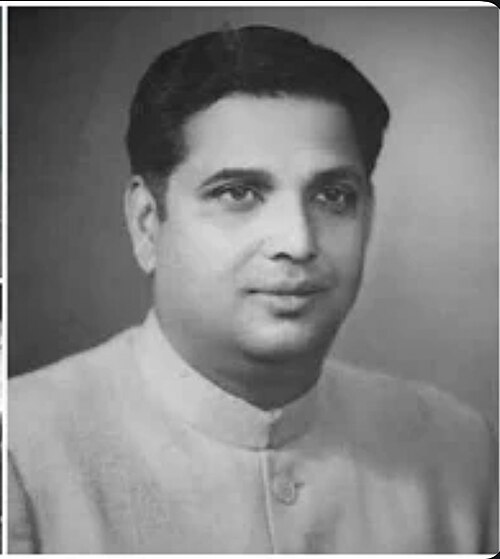
Bindeshwari Prasad Mandal (25 August 1918 – 13 April 1982), popularly known as **B. P. Mandal**, was an Indian politician, social justice advocate, and the chairman of the **Second Backward Classes Commission**, widely known as the **Mandal Commission**. His work fundamentally reshaped India's reservation policy and had a lasting impact on the political and social representation of the Other Backward Classes (OBCs). ([Wikipedia][1])
* Born on **25 August 1918**.
* Belonged to the **Yadav community** and hailed from the **Murho Estate** in present-day Madhepura district, Bihar.
* His father, **Rash Bihari Lal Mandal**, was a prominent landlord.
* Although he came from a wealthy family, B. P. Mandal became deeply involved in the struggle for the rights of socially and educationally backward communities. ([Wikipedia][1])
B. P. Mandal entered politics in the 1950s and emerged as an influential socialist leader in Bihar.
His major political positions included:
* Member of the Bihar Legislative Assembly.
* Member of the Lok Sabha from Madhepura.
* **7th Chief Minister of Bihar** in 1968.
His tenure as Chief Minister was brief, lasting only about a month, but he became the **first Yadav Chief Minister of Bihar**, an important milestone in the political rise of backward communities in North India. ([Wikipedia][1])
The defining moment of his career came in **1979**, when Prime Minister **Morarji Desai** appointed him Chairman of the **Second Backward Classes Commission**.
The Commission was tasked with:
* Identifying socially and educationally backward classes.
* Studying their representation in government services.
* Recommending measures to improve their social, educational, and economic status. ([Wikipedia][2])
After extensive surveys and analysis, the Commission submitted its report in **1980**.
Some of its major findings and recommendations included:
* Estimated that **Other Backward Classes (OBCs)** constituted about **52%** of India's population.
* Recommended **27% reservation** for OBCs in Central Government jobs.
* Suggested educational reservations and welfare measures.
* Used **11 social, educational, and economic indicators** to identify backwardness. ([Wikipedia][2])
Although the report was submitted in 1980, it was not implemented immediately.
In **1990**, Prime Minister **V. P. Singh** announced the implementation of the Commission's recommendation of **27% reservation for OBCs** in Central Government employment.
This decision:
* Triggered nationwide protests and support movements.
* Became one of the most significant developments in post-independence Indian politics.
* Led to the landmark **Indra Sawhney (1992)** Supreme Court judgment, which upheld OBC reservations while introducing the "creamy layer" principle and affirming an overall reservation ceiling of 50% (subject to certain later constitutional and judicial developments). ([Wikipedia][2])
B. P. Mandal's work had far-reaching effects:
* Expanded political representation for OBC communities.
* Influenced the rise of regional political parties representing backward classes.
* Made social justice and affirmative action central issues in Indian politics.
* Changed debates around equality, representation, and access to public employment and education. ([The Indian Express][3])
B. P. Mandal passed away on **13 April 1982**, before seeing his Commission's recommendations implemented. However, after 1990, his name became permanently associated with one of the most influential commissions in modern India. ([Wikipedia][1])
| Year | Event |
| -------- | ----------------------------------------------------------------------------------------- |
| **1918** | Born on 25 August |
| **1967** | Elected to the Lok Sabha |
| **1968** | Became Chief Minister of Bihar |
| **1979** | Appointed Chairman of the Second Backward Classes Commission |
| **1980** | Submitted the Mandal Commission Report |
| **1982** | Passed away on 13 April |
| **1990** | V. P. Singh government announced implementation of the 27% OBC reservation recommendation |
| **1992** | Supreme Court largely upheld OBC reservations in the Indra Sawhney judgment |
### Historical Significance
B. P. Mandal is remembered as one of the principal architects of modern India's OBC reservation framework. While opinions on the Mandal Commission and its impact have differed across political and social groups, his Commission remains a landmark in the history of affirmative action and the representation of socially and educationally backward classes in India. ([Wikipedia][2])
[1]: https://en.wikipedia.org/wiki/B._P._Mandal?utm_source=chatgpt.com "B. P. Mandal"
[2]: https://en.wikipedia.org/wiki/Mandal_Commission?utm_source=chatgpt.com "Mandal Commission"
[3]: https://indianexpress.com/article/explained/explained-politics/bihar-chief-ministers-bp-mandal-10339546/?utm_source=chatgpt.com "Bihar Chief Ministers | BP Mandal: Short tenure as CM, outsized legacy for OBC reservations commission | Explained News - The Indian Express"